By PPH Foundation
Postpartum haemorrhage remains one of the leading causes of maternal deaths worldwide, and health experts continue to warn that thousands of women still die because lifesaving blood is either unavailable, delayed, or inaccessible during childbirth emergencies. While advances in obstetric care have improved survival in many settings, access to safe blood transfusion remains one of the most critical gaps in maternal healthcare systems, particularly across low- and middle-income countries.
According to the World Health Organization, severe bleeding after childbirth accounts for approximately 27 percent of maternal deaths globally, with the majority occurring in settings where timely emergency care and blood products are limited. WHO further notes that safe blood transfusion is an essential component of comprehensive emergency obstetric care and remains central in preventing deaths from postpartum haemorrhage.
In many African countries, blood shortages continue to affect maternal survival due to low voluntary blood donation rates, inadequate blood storage systems, transport delays, and weak referral networks. Studies published in The Lancet and BMJ Global Health continue to show that delays in accessing blood transfusion contribute significantly to preventable maternal deaths associated with haemorrhage.
Recent research also highlights that women experiencing severe postpartum haemorrhage can lose large volumes of blood within minutes, making rapid transfusion support essential for survival. A 2024 review in Frontiers in Global Women’s Health emphasized that strengthening community blood donation systems, emergency blood transport, and decentralized blood access remains critical in reducing maternal mortality in resource-limited settings. (frontiersin.org)
Prof Julius Ogeng’o, a Co – Lead at the End PPH Initiative, says maternal survival during postpartum haemorrhage emergencies often depends on whether blood is available at the right place and time.
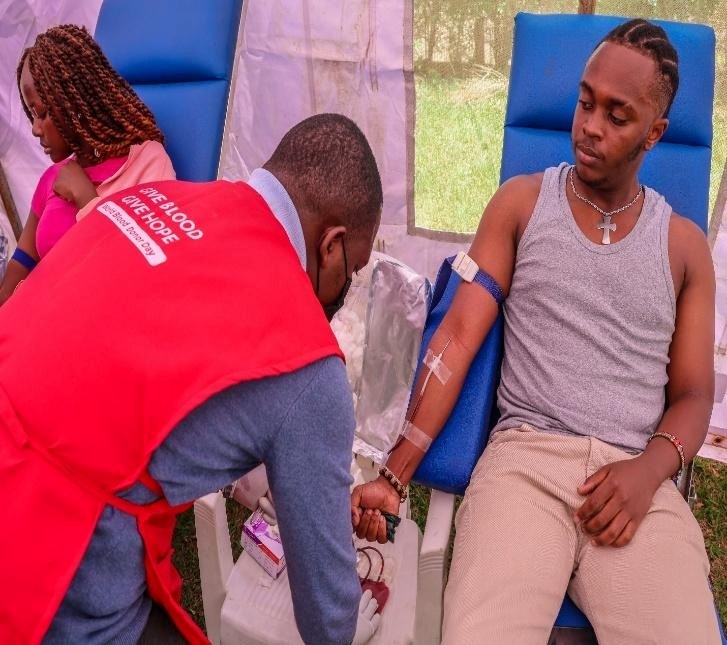
“Safe blood access remains one of the most important determinants of survival during severe postpartum haemorrhage. Community blood donation helps strengthen preparedness, supports emergency response, and saves mothers whose lives depend on immediate transfusion care. Blood donation is therefore not only a medical intervention, but also a public health responsibility,” he says.
Maternal health experts further warn that blood shortages tend to worsen during public holidays, disease outbreaks, school closures, and emergencies that reduce donor turnout. This has renewed calls for stronger community mobilisation, youth engagement, and institutional partnerships to strengthen national blood donation systems.
In Kenya and across Africa, initiatives aimed at strengthening blood access are increasingly being linked to maternal health advocacy, recognizing that no effective postpartum haemorrhage response system can function without reliable blood availability. Programmes supporting voluntary blood donation, mobile blood drives, solar-powered blood storage, and rapid blood grouping technologies are also gaining attention as countries work to improve maternal emergency preparedness.
Experts maintain that strengthening blood systems must remain part of broader investments in maternal healthcare, referral systems, health workforce training, and emergency obstetric preparedness if countries are to reduce preventable maternal deaths linked to postpartum haemorrhage.
Sources
- World Health Organization. Maternal Mortality Fact Sheet. Geneva: WHO; 2025. (who.int)
- World Health Organization. Blood Safety and Availability. Geneva: WHO; 2025. (who.int)
- Hanson C, et al. Maternal mortality and access to emergency obstetric care in low-resource settings. The Lancet Global Health. 2023. (thelancet.com)
- Mvundura M, et al. Strengthening blood systems to reduce maternal mortality in low-income countries. BMJ Global Health. 2024. (gh.bmj.com)
- Chukwuma C, et al. Blood Transfusion Systems and Maternal Survival in Sub-Saharan Africa. Frontiers in Global Women’s Health. 2024. (frontiersin.org)