By PPH Foundation
A woman experiencing postpartum haemorrhage can lose a dangerous amount of blood within minutes. In many settings, survival depends not only on the availability of medicines and blood products, but also on how quickly healthcare workers can access expert guidance, make critical decisions, and coordinate emergency care. Increasingly, telemedicine is emerging as a powerful tool in helping bridge these gaps and strengthen maternal health systems.
Telemedicine refers to the use of digital technologies to provide healthcare, training, consultation, and mentorship across distances. While it gained global attention during the COVID-19 pandemic, its role in maternal health has continued to expand, particularly in supporting emergency obstetric care, workforce development, remote mentorship, and postpartum follow-up. Research shows that telemedicine can improve access to specialist expertise, enhance clinical decision-making, strengthen emergency response, and reduce delays in care that often contribute to preventable maternal deaths.
Recent studies have highlighted the growing potential of telemedicine in the prevention and management of postpartum haemorrhage. A 2024 meta-analysis found that telemedicine and remote monitoring interventions were associated with significantly lower rates of postpartum haemorrhage, particularly through earlier detection of complications, improved communication, and faster clinical response.
Globally, telemedicine has been used to connect specialists with frontline healthcare providers managing obstetric emergencies. In the Dominican Republic, telemedicine-supported programmes have been used to strengthen surgical capacity and improve the management of postpartum haemorrhage. Similar initiatives in several countries have demonstrated how remote consultation and mentorship can help healthcare workers access specialist support without requiring patients to travel long distances.
Kenya has also emerged as an important example of how digital technologies can strengthen maternal healthcare. Through the Obstetric Safe Surgery Programme in Makueni County, Proximie technology has been used to connect healthcare providers across facilities, enabling remote mentorship, live case reviews, simulations, and continuous skills development in obstetric care. The programme has helped extend specialist expertise to facilities that would otherwise have limited access to senior mentors, while improving the consistency of training and quality improvement efforts.
Beyond direct patient care, telemedicine is increasingly transforming how healthcare workers are trained. Remote mentoring platforms allow specialists to observe procedures, provide guidance in real time, review recorded cases, and support ongoing professional development. Studies have shown that virtual reality and digital learning environments can significantly improve knowledge and confidence in postpartum haemorrhage emergency management among healthcare trainees.
Prof Moses Obimbo, Project Lead of the End Postpartum Haemorrhage Initiative, says telemedicine has the potential to transform maternal healthcare by ensuring that expertise is no longer limited by geography.
"Many maternal deaths occur because lifesaving decisions are delayed or specialist support is unavailable when needed. Telemedicine allows healthcare workers to access mentorship, consultation, and training regardless of location. It helps bring expertise closer to the patient and strengthens our ability to respond effectively to emergencies such as postpartum haemorrhage," says Prof Obimbo.
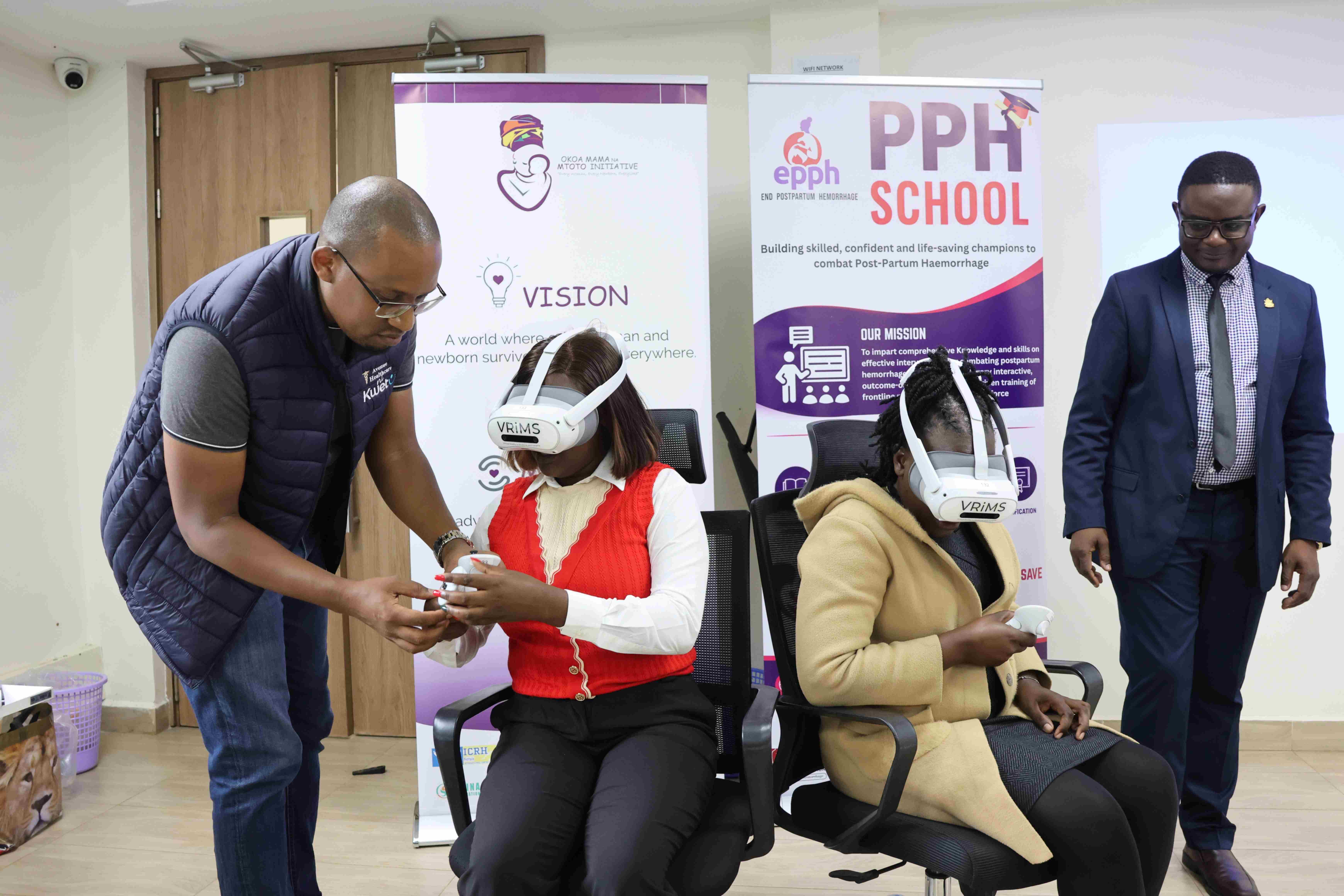
This vision is already being introduced to the next generation of healthcare professionals through the inaugural PPH School launched by the End Postpartum Haemorrhage Initiative. During the programme, medical students from several universities were introduced to telemedicine through demonstrations led by Dr Benjamin Njihia, a guest facilitator, using Proximie technology. Participants explored how remote mentorship, virtual collaboration, and digital learning platforms can strengthen maternal healthcare, support emergency obstetric response, and improve access to specialist expertise, particularly in underserved areas.
As health systems continue to embrace digital innovation, telemedicine offers an opportunity to strengthen maternal care beyond hospital walls. Combined with skilled healthcare workers, blood availability, emergency preparedness, and strong referral systems, telemedicine may become one of the most important tools in helping countries reduce maternal deaths from postpartum haemorrhage and move closer to a future where no woman dies while giving life.
Sources
- Stone JS, Hirshberg A. Telemedicine and Digital Health Solutions in Intrapartum and Postpartum Care. Current Obstetrics and Gynecology Reports. 2024;13:188–194.
- Anggraini D, Baska DY, Anissa K. Effectiveness of Telemedicine and Remote Monitoring in Reducing Postpartum Hemorrhage Rates: A Meta-Analysis. Natural Sciences Engineering and Technology Journal. 2024;4(2):365–377.
- Hirko KA, Heler A, Sampson T. Telehealth to Address Preventable Maternal Deaths: A Call to Action. Telemedicine and e-Health. 2024;30(12).
- Proximie. Global Health Initiative: Improving Equitable Access to Healthcare Where the Needs Are Greatest. 2025.
- Proximie. The Obstetric Safe Surgery Programme in Kenya: Co-designing Surgical Training and Mentoring Programmes with Local Teams. 2022.
- Dunlop K, Dillon G, McEvoy A, et al. The Virtual Reality Classroom: A Randomized Control Trial of Medical Student Knowledge of Postpartum Hemorrhage Emergency Management. Frontiers in Medicine. 2024;11:1371075.
- Clinical Simulation in Nursing. The Work Behind an Interdisciplinary Team: Creating a Postpartum Hemorrhage Virtual Reality Training Platform. 2024;94:101595.
- The Star. Jaramogi Hospital Adopts Digital Surgery with Launch of Proximie. 2025.