By PPH Foundation
When people hear about blood donation, they often think of road accidents, mothers who lose blood during childbirth or patients undergoing emergency surgery. These situations rightly draw attention to the need for blood. However, the demand for safe blood does not begin when an emergency occurs. Hospitals need a reliable supply every day to care for patients whose treatment depends on timely transfusion.
For women experiencing postpartum haemorrhage (PPH), this need can be particularly urgent. PPH is severe bleeding after childbirth and can become life-threatening within a short time. Blood transfusion may be needed as part of emergency treatment, alongside measures to stop the bleeding. If blood is not readily available, even a well-equipped health facility may struggle to provide timely care.
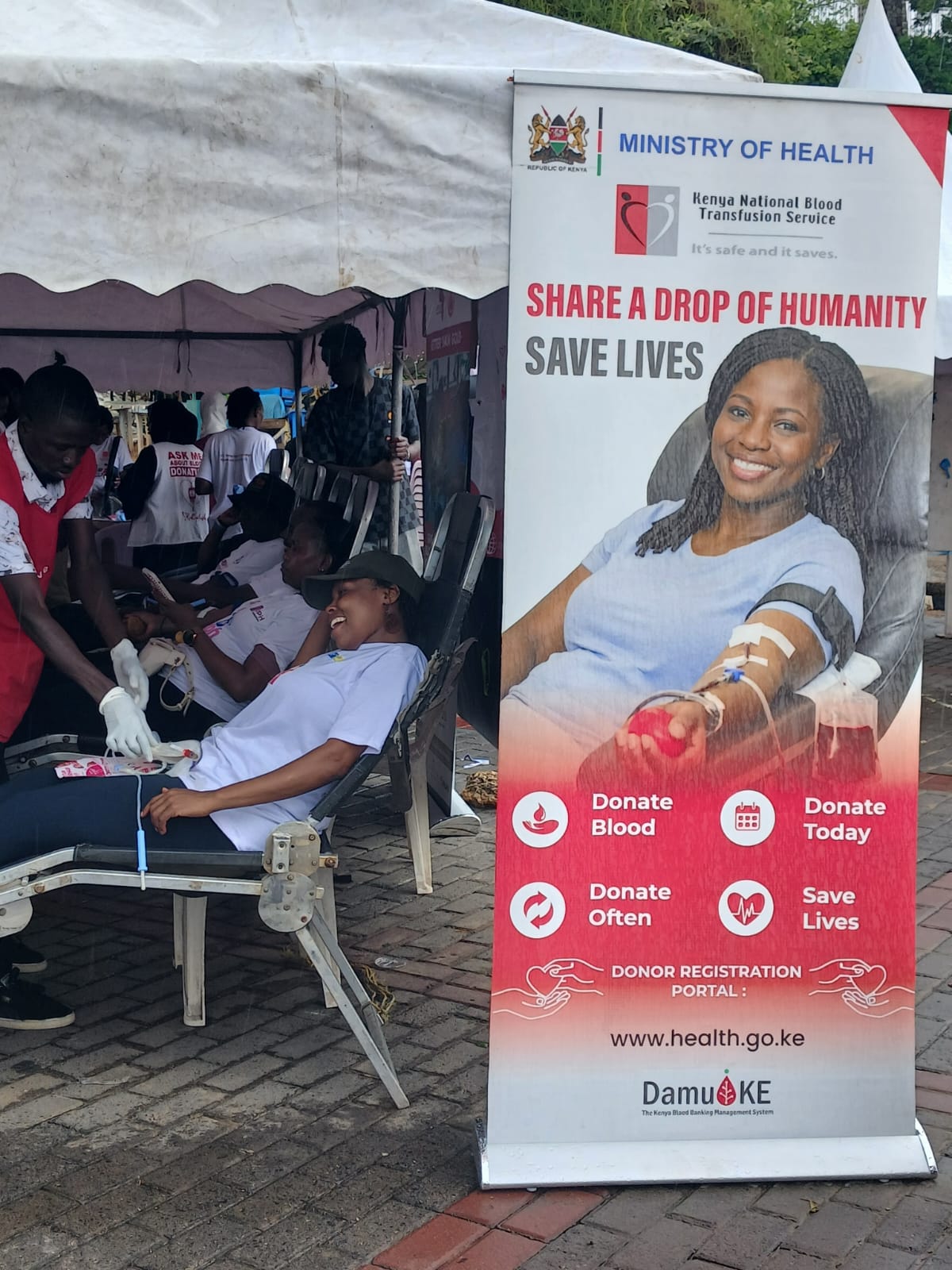
Regular blood donation helps hospitals prepare for these situations before they happen. Blood cannot be manufactured, so health services depend on voluntary donors to maintain supplies. It also has a limited storage life. Red blood cells can generally be stored for up to 42 days, while platelets may last only five to seven days, depending on the storage method. This means blood banks need a steady flow of donations rather than relying on occasional campaigns whenever stocks run low.
Kenya's blood supply figures show why this matters. The Ministry of Treasury's 2025 Draft Health Sector Report records that 333,533 units were collected in the 2024/2025 financial year, against a target of 530,000 units. The estimated national requirement for 2025/2026 is about 550,000 units. The gap means that hospitals and blood services need more people to donate, not only when there is a public appeal, but throughout the year (National Treasury, 2025). The World Health Organization also stresses that a reliable supply depends on a stable base of regular, voluntary, unpaid donors (WHO, 2026).
The importance of this supply is clear in maternity care. A study conducted at Kenyatta National Hospital and published in 2024 found that postpartum haemorrhage was the most common reason for blood transfusion among the women included in the study, accounting for 34.5% of transfusion indications. The study also found that only 65.4% of the participants who needed blood or blood components had their needs met. This points to a real challenge: collecting blood is important, but ensuring that the right blood products are available when patients need them is just as important (Wakoli et al., 2024).
Prof Julius Ogeng’o, Co-Lead of the End Postpartum Haemorrhage Initiative, has called for blood access to be treated as a shared responsibility involving families and communities. In a PPH Foundation article published in February 2026, he said: “Blood access is not simply a clinical supply issue; it must be a family and community priority. When families plan ahead, know blood types, and engage with blood donation systems before delivery, we see faster responses and lives saved” (PPH Foundation, 2026).
His message is a reminder that preparedness should begin before a patient reaches the hospital. Families can learn about blood donation and encourage eligible members to donate voluntarily. Communities, schools, workplaces, faith-based organisations and local groups can also support regular donation drives. These efforts help build a dependable pool of donors rather than placing pressure on relatives to find blood only after an emergency has occurred.
Regular donation must also go hand in hand with proper collection, testing, storage and distribution. Every donated unit is screened before it can be used, and blood services must ensure that it is stored under the right conditions and reaches facilities that need it. Strengthening these systems is particularly important for patients in areas where access to blood banks and emergency transport may be limited. A 2026 publication on emergency blood delivery in areas with limited blood supplies highlights how gaps in storage, testing and transportation can delay care for women experiencing PPH (Tripathi et al., 2026).
Blood donation should therefore not be viewed as an activity reserved for emergencies or special national campaigns. It is part of the everyday work of keeping health services ready for patients who may need transfusion without warning. A person who donates today may never know whose life their blood will help save. But for a mother experiencing severe bleeding after childbirth, a child with severe anaemia or a patient undergoing surgery, that donation could make the difference between receiving treatment in time and facing a life-threatening delay.
Encouraging people to donate regularly, where they are eligible, is one practical way communities can help hospitals prepare. The need for blood does not wait for an emergency, and neither should the effort to keep supplies available.
References
National Treasury. (2025). Draft health sector report. https://www.treasury.go.ke/sites/default/files/NEW/Draft-Health-Sector-Report-11.11.2025.pdf
PPH Foundation. (2026, February 2). Blood is a family issue: Evidence, systems, and shared responsibility to prevent PPH-related maternal deaths. https://www.endpphfoundation.org/pulse/blood-is-a-family-issue-evidence-systems-and-shared-responsibility-to-prevent-pph-related-maternal-deaths
Tripathi, I., et al. (2026). Emergency blood delivery for women in blood deserts: Closing the gap in postpartum haemorrhage care. Contraception and Reproductive Medicine. https://doi.org/10.1136/conmed-2026-000071
Wakoli, E., Gwako, G., Owende, P., Ogutu, O., Odongo, E., & Karanja, J. (2024). Prevalence and pattern of blood and blood component utilization at the Kenyatta National Hospital maternity unit in 2022–2023: A cross-sectional study. Journal of Obstetrics and Gynaecology of Eastern and Central Africa, 36(1). https://doi.org/10.59692/jogeca.v36i1.164
World Health Organization. (2026). Blood safety and availability. https://www.who.int/news-room/fact-sheets/detail/blood-safety-and-availability
World Health Organization. (2026). Global status report on blood safety and availability 2025. https://www.who.int/publications/i/item/9789240121546