By PPH Foundation
When a woman begins bleeding heavily after childbirth, the maternity ward can change within minutes. Health workers move quickly, medicines are prepared, intravenous access is established, blood may be requested and, depending on the severity of the bleeding, additional clinical support or emergency surgery may be required.
In such moments, communication can easily be treated as secondary to the clinical response. Yet what a health worker says, what is communicated to the rest of the team and how information moves between the maternity unit, laboratory, blood bank, theatre and referral facility can influence how quickly the right intervention reaches the woman.
This is particularly important in postpartum haemorrhage, where several actions may need to happen at the same time rather than one after another.
The World Health Organization's 2025 Consolidated Guidelines for the Prevention, Diagnosis and Treatment of Postpartum Haemorrhage emphasise a proactive approach based on readiness, recognition and response. Prof Ann Beatrice Kihara, Co-Lead of the End Postpartum Haemorrhage Initiative, explained the importance of this approach when the guidelines were launched, saying, “These guidelines take a proactive approach of readiness, recognition and response. They are designed to ensure real-world impact – empowering health workers to deliver the right care, at the right time, and in a wide range of contexts.”
That principle extends beyond clinical procedures. A team cannot respond appropriately to an emergency if critical information is not communicated clearly and quickly.
Consider a woman whose blood loss is increasing. One health worker may recognise the change first. The next step is not simply to continue working at the bedside. The team may need to alert a senior clinician, prepare medicines, request blood, arrange laboratory tests, prepare the operating theatre or activate a referral pathway. Each action depends on someone recognising the situation and communicating what is happening to the people who need to respond.
If that communication is delayed, unclear or incomplete, the clinical response can also be delayed.
Communication is equally important between health workers and the woman herself. During a haemorrhage, procedures may need to be performed rapidly, sometimes while the woman is frightened, in pain or unable to understand what is happening around her. The urgency of the situation does not remove the need to explain what is happening as much as the circumstances allow.
In a 2026 article published by the PPH Foundation, Prof Kihara emphasised this balance: “Emergency situations require rapid action, but rapid action should not mean abandoning communication. Even in moments of urgency, healthcare providers can explain what is happening, seek consent where possible, reassure women and their families, and preserve dignity. Clinical excellence and respectful maternity care should go hand in hand.”
This matters because an emergency can involve several interventions that may be unfamiliar or frightening to a woman. Uterine massage, administration of medicines, blood transfusion, manual procedures, balloon tamponade or surgery can all be introduced within a short period when bleeding is severe. Explaining what is being done and why can help the woman and her family understand the urgency while preserving dignity and trust.
Communication also has a practical clinical function. A woman who understands what is happening is better positioned to provide information that may be important to her care, including previous medical conditions, medications, allergies or events surrounding the birth. Where possible, involving her in decisions also supports informed consent even when the situation is urgent.
The need for clear communication does not stop at the bedside.
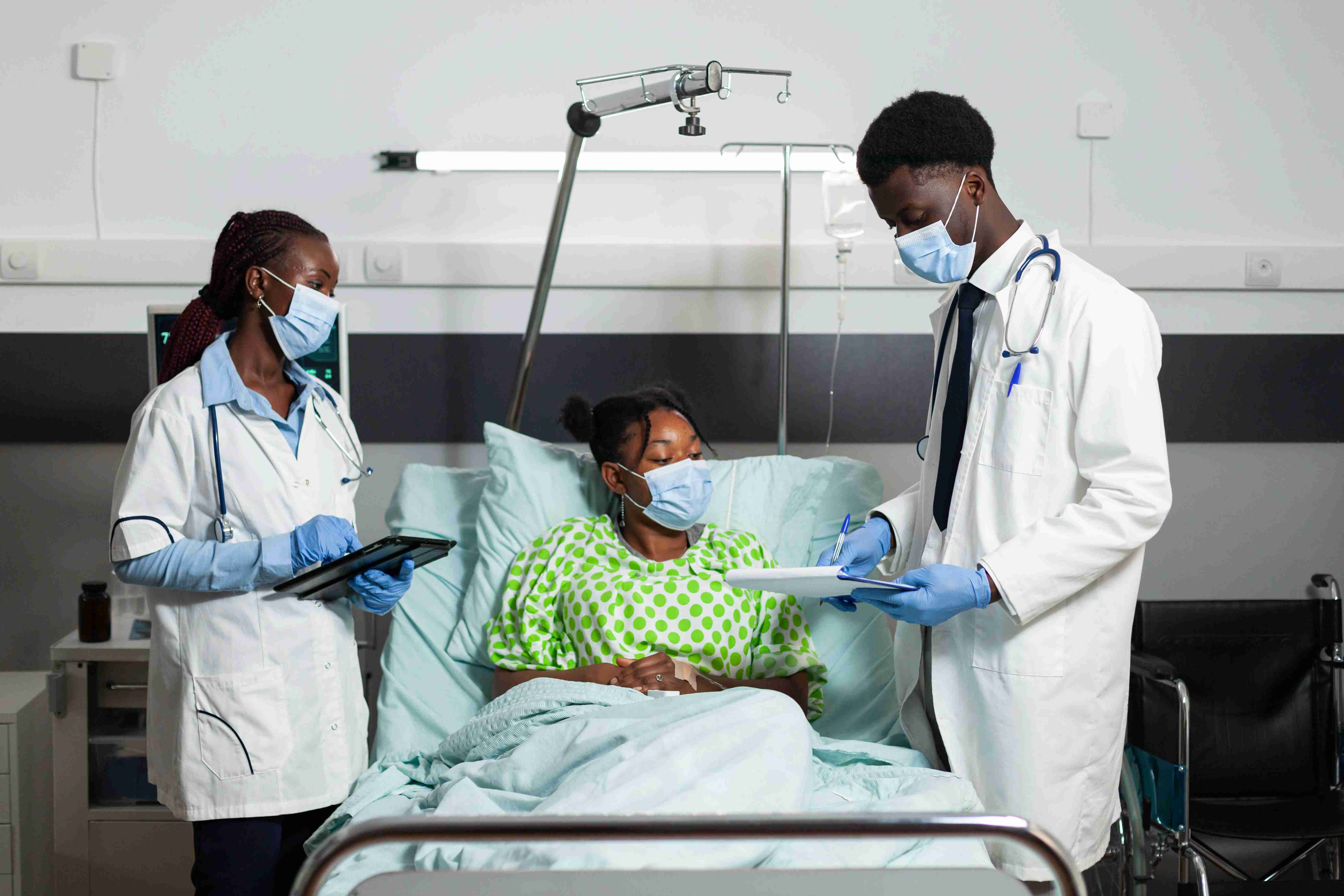
Postpartum haemorrhage is often a team emergency. Midwives, nurses, doctors, anaesthesia teams, laboratory staff, blood bank personnel and theatre teams may all become involved. If each person is working with a different understanding of the woman's condition, valuable time can be lost.
A clear escalation message can therefore make a difference. Instead of simply saying that a woman is “bleeding”, the team needs to communicate information that helps others understand the seriousness of the situation, including the amount and progression of blood loss, vital signs, suspected cause, interventions already given and what support is required.
The same applies during referral.
When a woman needs to be transferred to another facility, the receiving team needs sufficient information to prepare before she arrives. A referral that communicates only that a woman has “PPH” may not give the receiving facility enough information to organise blood, theatre space, specialist support or other resources. A clear handover can allow the receiving team to begin preparing while the woman is still in transit.
This becomes especially important where referral systems already involve significant distances or delays.
Prof Kihara has repeatedly emphasised that maternal deaths should be understood within the wider health system rather than attributed to a single clinical event. In a recent interview, she pointed to staffing levels, blood availability, functioning referral systems, medical supplies, leadership, financing and transport as interconnected factors affecting maternal outcomes.
Communication sits across many of these systems. A blood shortage may require communication between the maternity unit and blood bank. A referral requires communication between facilities. A deteriorating patient may require escalation to a senior clinician. A need for surgery requires coordination between the maternity, theatre and anaesthesia teams.
In each case, communication is part of how the health system moves from recognising a problem to acting on it.
Technology can support this process, but it does not automatically solve it. Electronic records, digital referral platforms, mobile phones and other communication systems can help health workers share information rapidly, particularly across facilities. However, these tools are useful only when health workers know what information needs to be communicated and when there are clear systems for responding to that information.
The WHO's 2025 PPH guidelines therefore place emphasis not only on interventions themselves, but also on readiness and health-system implementation. The guidelines recognise that health facilities need the capacity, resources and systems required to translate evidence into timely action.
For maternity teams, this means communication should be treated as part of emergency preparedness rather than something added after the clinical work is complete.
Teams can practise how they will call for help, how they will communicate a rapidly deteriorating patient, how blood will be requested, how a referral will be activated and what information will be handed over to the receiving facility. They can also consider how they will communicate with women and families when an emergency is unfolding.
These preparations may appear simple, but emergencies are precisely when simple systems can become difficult to follow.
A health worker who knows exactly whom to call, what information to provide and what response to expect does not have to spend precious minutes working out the process while a woman is deteriorating.
The same principle applies to the woman and her family. Telling them what is happening, explaining urgent interventions and providing reassurance where possible can help reduce fear while maintaining trust at a time when the situation may feel chaotic.
For the PPH Foundation, strengthening the response to postpartum haemorrhage therefore requires more than making clinical interventions available. It also means strengthening the systems through which information, decisions and support move during an emergency.
A woman's life may depend on whether blood is available, whether a theatre is ready or whether a referral vehicle arrives. But before many of these actions can happen, someone has to recognise the problem and communicate it clearly to the person who can act.
In a maternal emergency, communication is not simply about speaking.
It is about ensuring that the right information reaches the right person at the right time, so that the right action can follow.
As Prof Kihara reminds us, rapid action and respectful communication do not have to compete with each other. Both are part of quality maternal care, particularly when every minute matters.
Sources
- World Health Organization, Consolidated guidelines for the prevention, diagnosis and treatment of postpartum haemorrhage, 2025.
WHO, Consolidated guidelines for the prevention, diagnosis and treatment of postpartum haemorrhage - PPH Foundation, Enhancing Maternal Awareness During Management of Postpartum Haemorrhage, 2026.
PPH Foundation, Enhancing Maternal Awareness During Management of Postpartum Haemorrhage - Willow Health Media, Prof Anne-Beatrice Kihara, She Repeated a Year in Med School, Delivered 40,000 Babies, Never Stopped Asking Why Mothers Die, 2026.
Willow Health Media, Prof Anne-Beatrice Kihara - Kihara A-B, Louwen F, Oladapo OT, Wright A, Postpartum haemorrhage, A turning point for global action, International Journal of Gynecology & Obstetrics, 2026.
PubMed, Postpartum haemorrhage, A turning point for global action - Image by DC Studio on Magnific</a>